
Here’s the short answer: an Amazon Basics speaker in 2026 means the desktop line, not the portable ones. The 15W Bluetooth and the 2.1 30W subwoofer set from the original post are gone from Amazon. What’s alive is the USB-powered 2.0 desktop pair — #1 best-seller in its class, 10,000+ bought last month — and if you want portable, the JBL Go 4 at ~$40 is the honest replacement.
- Amazon Basics Speaker: The 2026 Lineup Still on Sale
- Amazon Basics Stereo 2.0 (USB, AUX) — Best Overall (~$15–20)
- Amazon Basics USB Compact (2.1W) — Cheapest (~$10–15)
- Amazon Basics AC-Powered 10W Desktop — Loudest in the Line (~$20–25)
- Amazon Basics Bluetooth + USB (LED) — Best Wireless (~$16–20)
- Edifier R1280T — The Step Up (~$100–150)
- JBL Go 4 — The Portable Replacement (~$40)
- What Happened to the Speakers in the 2021 Version
- What to Actually Buy in 2026
- Frequently Asked Questions
Amazon Basics Speaker: The 2026 Lineup Still on Sale
What you can actually buy from the brand right now, with real street prices:
| Speaker | Best for | Price (2026) |
|---|---|---|
| Amazon Basics Stereo 2.0 (USB, AUX) | Best overall, daily desk use | ~$15–20 |
| Amazon Basics USB Compact (2.1W) | Cheapest, small desk | ~$10–15 |
| Amazon Basics AC-Powered 10W | Loudest in the line | ~$20–25 |
| Amazon Basics Bluetooth + USB (LED) | Wireless to a PC | ~$16–20 |
| Edifier R1280T | Step up, real sound quality | ~$100–150 |
| JBL Go 4 | Portable, replacement for the dead 15W BT | ~$40 |
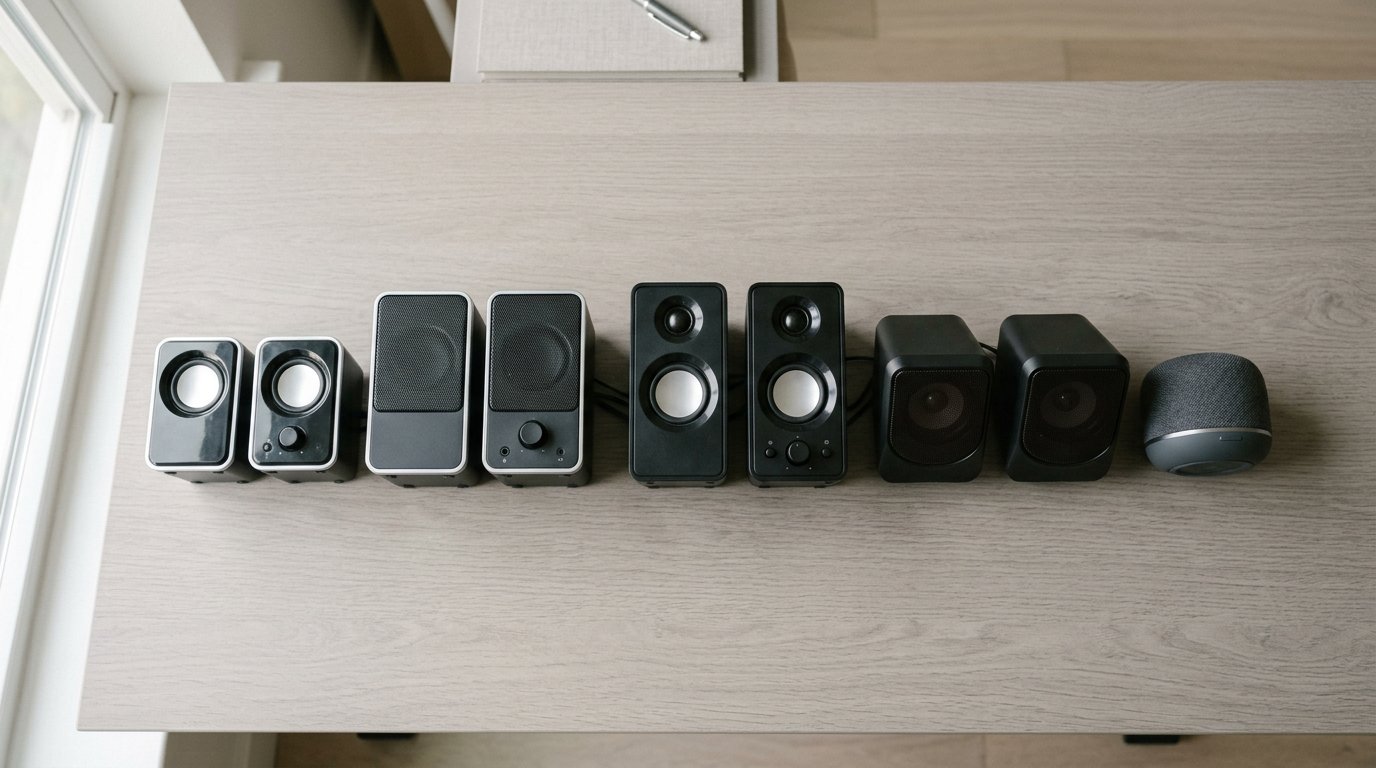
Amazon Basics Stereo 2.0 (USB, AUX) — Best Overall (~$15–20)
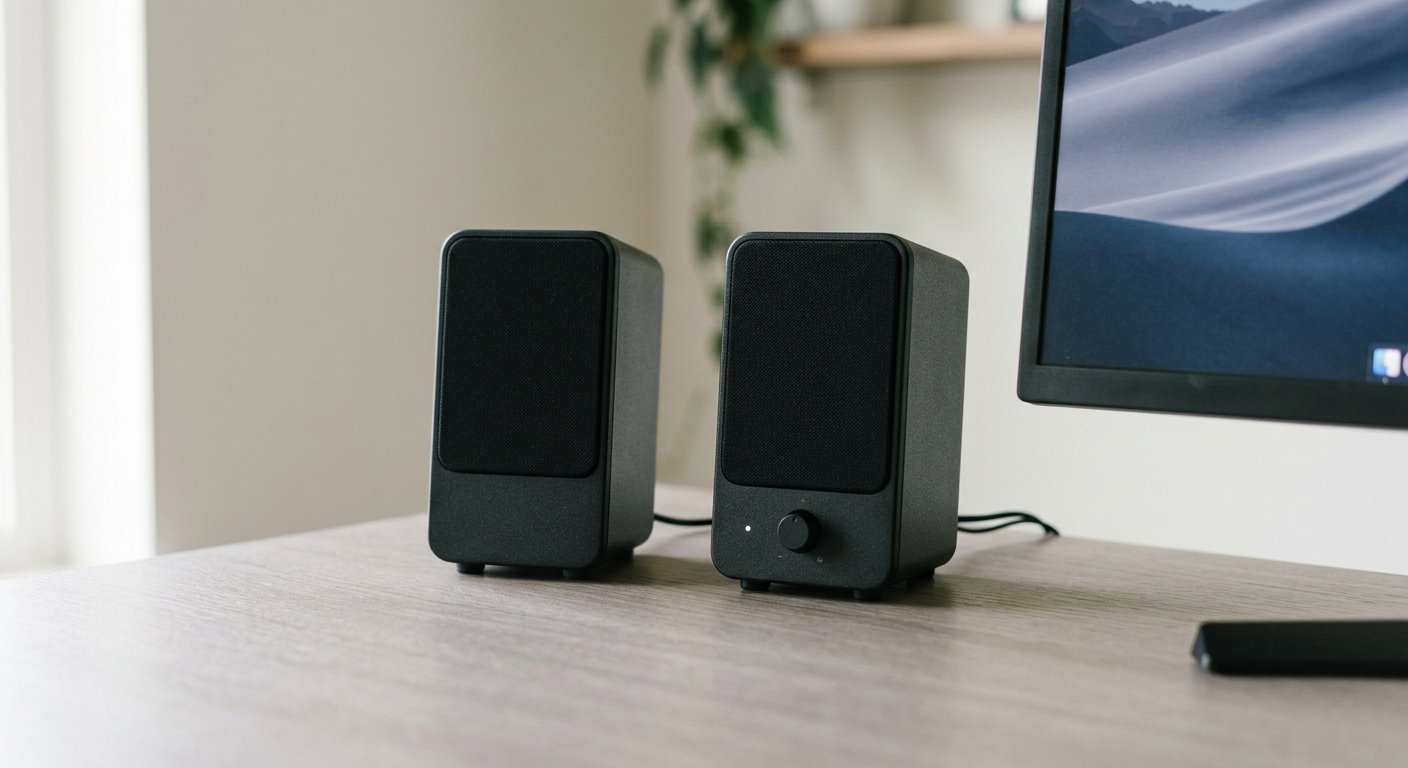
The one to buy for the laptop-upgrade that works: USB-powered, 3.5mm AUX in, volume control, no drivers, #1 best-seller in its category with 10,000+ units bought a month and about 80,000 reviews at 4.5 stars. Sound is clean and clear for podcasts, calls, and casual music — not bass-heavy, not "wow," exactly what the price promises. The catch: it draws from one USB port, so a laptop short of ports will feel it. Check the price on Amazon.
Amazon Basics USB Compact (2.1W) — Cheapest (~$10–15)
The smallest, most budget pick: 2.1W total, compact enough for a shelf, headphone jack, plug-and-play, Amazon’s Choice with 5,000+ bought a month. At this size and price, expect useful clarity rather than volume — a quiet desk, not a room. The AC-powered pair below is $10 more and noticeably louder. Check the price on Amazon.
Amazon Basics AC-Powered 10W Desktop — Loudest in the Line (~$20–25)
The step up on volume: 10 watts off the wall instead of 2 off a USB port — the only Amazon Basics desktop pair that can fill a room. Volume control and headphone jack included, Amazon’s Choice with 2,000+ bought a month. The trade is the power cord. If loudness is the point and you’re not spending Edifier money, this is the line’s ceiling. Check the price on Amazon.
Amazon Basics Bluetooth + USB (LED) — Best Wireless (~$16–20)
The only current Amazon Basics desktop speaker with Bluetooth, so the cable disappears. 4.3 stars across about 1,200 reviews, tasteful blue LED (not RGB), USB power, volume control. The catch: Bluetooth adds a little latency you’ll notice with video, and the drivers are small — music and calls, not room-filling. Check the price on Amazon.
Edifier R1280T — The Step Up (~$100–150)
When the search turns into "what actually sounds good under $150," this is the answer: PCMag Editors’ Choice, 42W total, 4-inch woofers, silk-dome tweeters, RCA in, physical bass and treble knobs. It’s the current-generation form of the r/BudgetAudiophile consensus: "At the same price as these AmazonBasics speakers or cheaper, the Edifier P12, Edifier P17, Micca MB42X, and Micca OoO are all better." The catches: it’s big, no Bluetooth (the R1280DB adds that), and it distorts at the last 10% of volume. Check the price on Amazon.
JBL Go 4 — The Portable Replacement (~$40)
The honest answer to "where did the AmazonBasics 15W Bluetooth go": Amazon quietly exited the cheap portable market, and brands that do the category well filled the gap. The Go 4 is IP67, 6.7 ounces, 7 hours of battery, about $40 (MSRP $50) — the same bracket the 15W held at, with far better sound. Budget runners-up are on Gadgetping’s portable Bluetooth speaker guide. Check the price on Amazon.
What Happened to the Speakers in the 2021 Version
We re-checked all five 2021 picks on Amazon in August 2026:
| 2021 pick | 2026 status |
|---|---|
| AmazonBasics 15W Bluetooth | Currently unavailable |
| Oternal "Portable V5.0" | Currently unavailable — and it was never Amazon Basics, a third-party brand mislabeled in the post |
| AmazonBasics Dual 3W (2016 model) | No live listing |
| AmazonBasics 2.1 30W subwoofer | Currently unavailable |
| AmazonBasics PC Multimedia 13W | Superseded by the current USB/AC desktop line |
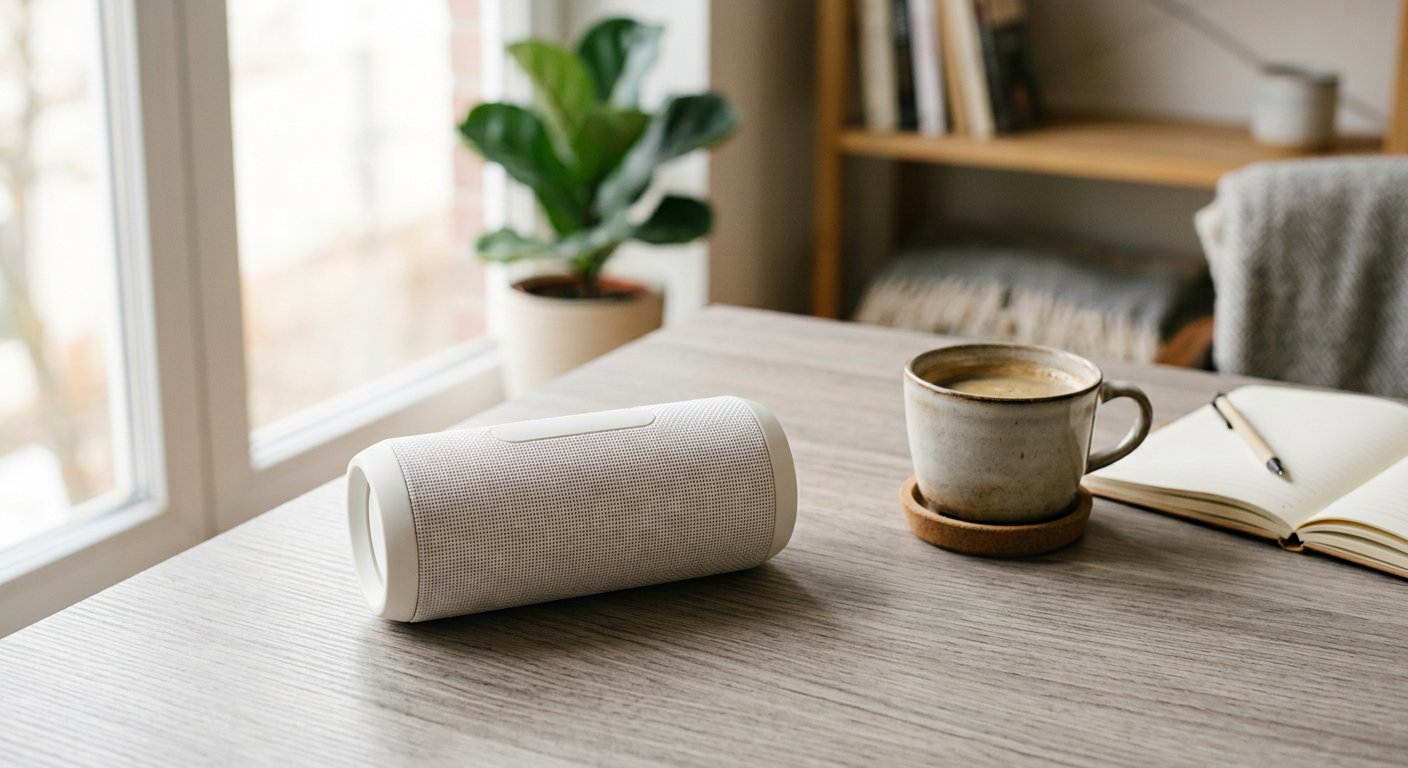
The lesson: Amazon’s house brand now concentrates in the unglamorous, high-volume desktop tier and let the portable tier die. Old 2021 links for the 15W and the 30W set no longer lead to buyable stock.
Sound reputation tracks price. Long-time owners are happy — one in r/Frugal: "I’ve had them since 2015 and they have been rock solid. They are usually $15 or under and while they aren’t anything special the sound is crisp." The audio end of the line earned a harsher word from r/BudgetAudiophile, where a reviewer’s roommate summed it up: "why do these sound so tinny?" Neither is surprising — at this price, you’re buying function, not sound.
Threads: r/Frugal — frugal computer speakers · r/BudgetAudiophile — AmazonBasics review
What to Actually Buy in 2026
- Quiet desk, minimal budget → USB Compact (~$10–15). It does the job.
- Normal desk use, calls and music → Stereo 2.0 (~$15–20). The volume of sales is the review.
- Loud room, no cable for audio → AC-Powered 10W (~$20–25).
- Phone on the desk, no cable at all → Bluetooth + USB LED pair (~$16–20).
- Sound quality that matters → stop at Amazon Basics and buy the Edifier R1280T (~$100–150). The Reddit consensus above is blunt, and it’s correct.
- Portable → JBL Go 4 (~$40). The AmazonBasics 15W’s old price bracket, better in every spec.
Frequently Asked Questions
Are Amazon Basics speakers still sold in 2026?
Yes — the desktop line. The USB 2.0 pair, compact USB pair, AC-powered 10W, and Bluetooth + USB LED pair are all live. The portable models (15W, Nano) and the 2.1 30W subwoofer set show "Currently unavailable."
Which Amazon Basics speaker is the best?
For most desks, the Stereo 2.0 USB pair at ~$15–20 — best-seller in its class, 10K+ bought a month, 4.5 stars. If you need volume, the AC-Powered 10W. If you need real sound quality, skip the brand and get the Edifier R1280T.
Why did Amazon stop selling portable Amazon Basics speakers?
Nobody announced it — the listings just went unavailable, which is how Amazon usually phases out house-brand products. The portable tier is crowded (JBL, Anker, Tribit, Marshall) and doesn’t fit the "cheap essentials" strategy, so the brand concentrated in desktop speakers, where it’s now a category best-seller.
Do Amazon Basics computer speakers sound good?
Fine for the price: clear mids, flat bass, no magic. Owners keep them for years ("rock solid" is the common word), and the audio-focused side of Reddit calls the larger models tinny. Set expectations to "useful," and they’re one of the best-value desk upgrades under $25.
Is there a Bluetooth Amazon Basics speaker I can buy right now?
Yes — the Bluetooth + USB Computer Speakers with LED lighting (~$16–20, 4.3 stars). It’s the only current model with Bluetooth. For portable Bluetooth, the 15W is gone — the JBL Go 4 is the natural replacement at ~$40.
So the map: desk, Stereo 2.0. Loud desk, AC 10W. Wireless desk, the Bluetooth + LED pair. Portable, JBL Go 4. Sound that matters, Edifier R1280T. And before you follow any 2021 link for the 15W or the 30W subwoofer — check the box first, because Amazon has already removed them.
Over at Gadgetping we test gadgets from Amazon, AliExpress and Flipkart so you buy the right one — not the loudest one: real 2026 availability, real prices, and the user consensus before you buy. If you’re outfitting the whole desk, our top wireless earbuds under $50 cover the personal side, our Amazon Echo Dot 2nd gen review covers the smart-speaker side, and our audio buying guides have the rest.